al-Muqaddimah/Prelude
What’s “`Ulūm-ul-Hadīth”?!!!
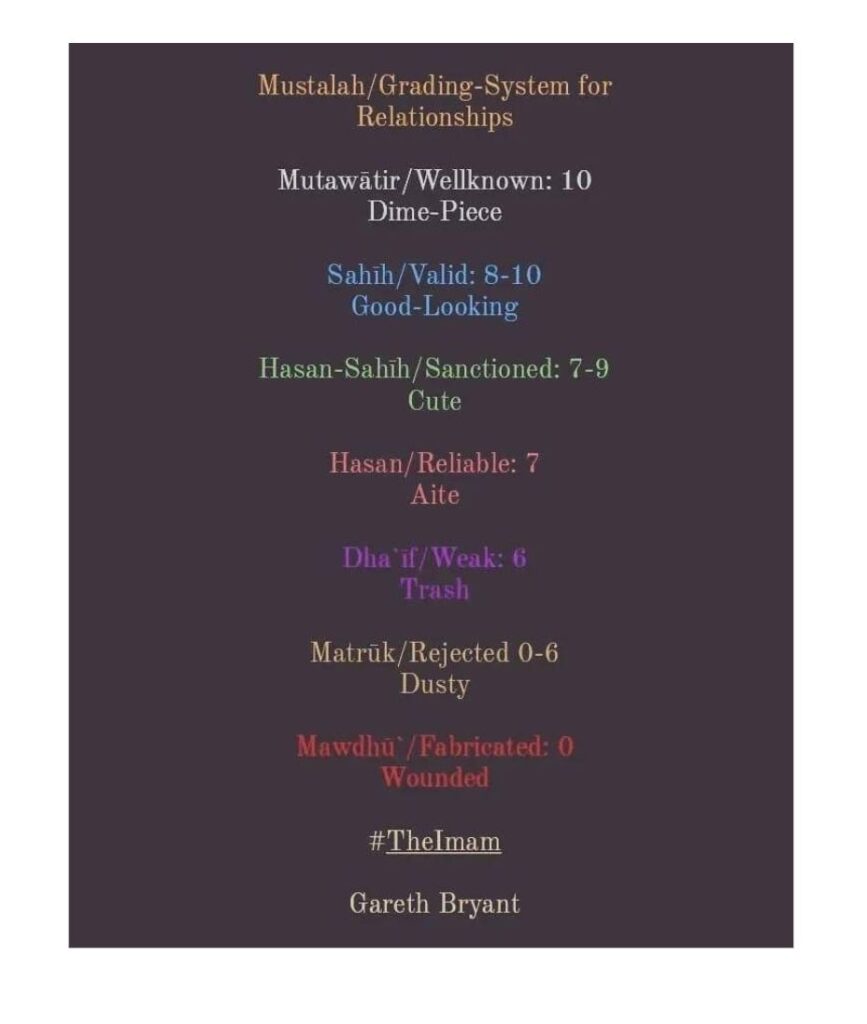
`Ulūm-ul-Hadīth is a Religio-Academic Discipline, spanning 14-Centuries, AH/CE, and it’s Maslahah (Purpose) is to provide Checks&Balances as per which Kinds/Types of Religio-Info. are deemed Authentic, Reliable, Weak, Rejected, Fabricated, etc.
Ironically, these’re all actual/real Religio-Academic Terms:
Sahīh (Authentic)
Hasan (Reliable)
Dha`īf (Weak)
Matrūk (Rejected)
Mawdhū` (Fabricated)
There’s Sub-Categories to all of these by the way, which Muhaddithūn (Hadīth-Scholars) have codified over the past 14-Centuries, AH/CE.
Here’s a Funny-Way to comprehend this:
How/why is `Ulūm-ul-Hadīth so important?!!!
#GoodQuestion…#Answer:
Number-1
It humanly preserves the `Izzah (Integrity) of al-`Ilmiyyah (Islāmic-Knowledge).
Number-2
It’s a Religio-Academic Gatekeeper, thereby ensuring the Amān/Safety of any/all other Furū`(Branches) of al-`Ilmiyyah.
Number-3
It prevents Muslim&Non-Muslim Islāmophobes from deceiving the Muslims via Islāmophobic-Kalām/Rhetoric.
Dissecting & Disproving the Stupidity of Qur’ānism
Islāmophobia via Qur’ānism
Starving for Attention via Preying upon the Ignorant
The Religio-Evidences proving both al-Qur’ān as well as as-Sunnah are at-Tanzīl (Revelation) via Hadīth
Number-1
The word “Hadith” (pl. “Ahādīth”), according to the Arabic-Language, means the following:
Statement
Story
Relation
Narration/Narrative
Declaration/Proclamation
News/Report
Message
Record/Recording
Document/Documentation
etc.
(Lisan-ul-`Arab/The Language of the Arab: Lexicon of the Arabic-Language, Muhammad ibn-Manzhūr)
Number-2
The Qur’an, itself, the Entire-Canon of Revelation, known as “The Book of Allah” is a Hadīth by default/definition. Allah states, within Sūrat-il-Kahf (Chapter of the Cave):
“Will you, yourself, grieve over their statements/lies, just because they do not believe in This-Hadīth?”
(Chpt.18, V.6)
Also, within Sūrat-idh-Dhuhā (Chapter-of-Forenoon):
“And, proclaim the Favor of your Lord.”
(Chpt.93, V.11)
In both of these verses, respectively, the Word “Hadīth” is directly used, as well as the Conjugative-Derivative of the Verb which the word “Hadīth” comes from. The Verb that the word “Hadīth” comes from is “Haddatha”, which means “To tell”.
(Lisān-ul-`Arab)
Number-3
Both al-Qur’ān & as-Sunnah were narrated, as well as documented, during the lifetime of Muhammad (Peace be upon him).
Muhammad once stated:
“Relate from me, even if only 1-Āyah/Verse.”
(al-Bukhārī, al-Hākim, al-Qāsim ibn-Sallām, ibn-Hishām, al-Mustadrak)
How were al-Qur’ān & as-Sunnah even preserved in the 1st-Place?!!!
#GoodQuestion…#Answer
The Hifzh/Preservation-Methods consists of the Following-Things used historically:
at-Taklīm/as-Samā` (Conveyence/Oration)
as-Sam` (Hearing/Listening)
al-Hifzh (Memorization)
al-`Ardh (Recall/Revision)
al-Kitābah (Documentation)
al-Ijāzah (Certification/Authorization)
All of the aforementioned were done between Muhammad and as-Sahābah (the Companions of Muhammad), between as-Sahābah and at-Tābi`īn (the Followers of the Companions). And all Subsequent-Generations have followed this Preservational-Precedent till the Present-Day.
Well…Who documented al-Qur’ān and who documented as-Sunnah and when were they documented?!!!
#GoodQuestion…#Answer
Now, to be just/fair:
The Entirety of as-Sunnah was never completely-documented during the Lifetime of Muhammad, like al-Qur’ān was. Yet, still, that Fact doesn’t replace the Religio-Historical Reality that as-Sunnah most definitely began to be documented prior to the Death of Muhammad. The Following-Illustration serves as such a Proof of the aforementioned.
Qur’ān-Recitation History
The Companions/Followers of Muhammad (Peace be upon him [May Allah be pleased with them all-together]) whom were able to both read & write, were commissioned, personally, by Muhammad, to document both al-Qur’an as well as as-Sunnah.
These-Persons are known as the Following-Individuals:
1. al-Khulafā’-ur-Rāshidūn (the 1st Khulafā’/Islamic-Rulers [of the Muslims] after the death of Muhammad [Peace be upon him]):
`Abdullah ibn-`Uthmān ibn-`Āmir/Abū-Bakr as-Siddīq, `Umar ibn-ul-Khattāb, `Uthmān ibn-`Affān, `Alī ibn-`Imrān, al-Hasan ibn-`Alī, Mu`āwiyah ibn-Sakhr.
2. al-`Asharat-ul-Mubashshirūn (the 10-Companions promised Paradise by Name, during the Lifetime of Muhammad [Peace be upon him]):
Abū-Bakr as-Siddīq, `Umar ibn-ul-Khattāb, `Uthmān ibn-`Affān, `Alī ibn Abī-Tālib, `Abd-ur-Rahmān ibn-`Awf, Talhah ibn-`Ubaydillah, Sa`d ibn Abī-Waqqās, Sa`id ibn-Zayd, az-Zubayr ibn-al-`Awwām, Abū-`Ubaydah ibn-il-Jarrāh.
3. Nisa’-un-Nabī/the Wives of the Prophet:
Khadījah bint-Khuwaylid, Hafsah bint-`Umar (ibn-il-Khattāb), `Āi’shah bint Abiī-Bakr, etc.
4. Ahl-ul-Bayt/Members of the Prophetic-Household:
`Abdullah ibn-ul-`Abbās (ibn-`Abbās), Khadījah bint-Khuwaylid, Hafsah bint-`Umar (ibn-il-Khattāb), `Āi’shah bint Abī-Bakr, Abū-Bakr as-Siddīq, `Umar ibn-ul-Khattāb, `Uthmān ibn-`Affān, `Alī ibn Abi-Tālib, Sa`d ibn Abī-Waqqās, etc.
5. Other Various-Companions:
Zayd ibn-Thābit (the Official-Scribe of Muhammad), Ubayy ibn-Ka`b, `Abdullah ibn-Mas`ūd, etc.
6. There’s even an Official-Account, by Hārith ibn-Rabi` (Abū-Qatādah) whom personally asked Anas ibn-Mālik whom were the Documenters of The Qur’ān, during the lifetime of Muhammad & Anas replied, “There were 4 & they were all from among al-Ansar/the Assistants (the 2nd-Wave of the Companions of Muhammad who helped al-Muhājirīn/the Escapees spread al-Islām throughout the rest of the Arabian-Peninsula, outside of al-Hijāz [the traditional homeland of the Tribe of Muhammad: Quraysh] consisting of Modern-Day: Jiddah, Tā’if, Makkah, al-Madīnah…basically, the Entire Western-Coast of the Arabian-Peninsula):
Ubayy ibn-Ka`b, Mu`ādh ibn-Jabal, Zayd ibn-Thābit and Abu-Zayd.
(al-Bukhārī)
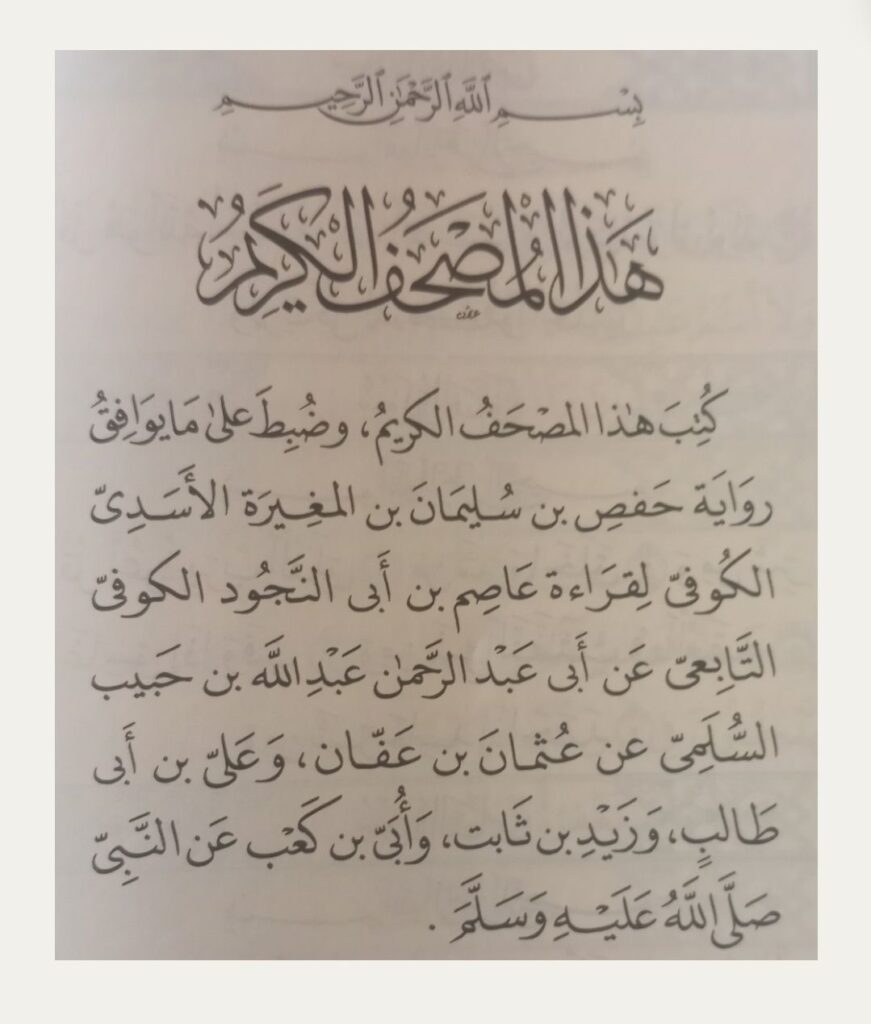
It’s Musnad/Transmission hails from
Hafs ibn-Sulaymān ibn-il-Mughīrah from
`Āsim ibn Abin-Najūd from `Abdillah ibn-Habīb from `Uthmān ibn-`Affān (which the `Uthmānī-Mushaf is directly named after),
as well as `Alī ibn-`Imrān, as well as
Zayd ibn-Thābit, as well as Ubayy ibn-Ka`b (May Allah be pleased with them) from Muhammad (Peace be upon them).
The Qur’ān & the Sunnah/are jointly and indivisibly at-Tanzīl (Revelation)
OK…So how’s it known what’s a “True vs. False Hadīth” from either al-Qur’ān or as-Sunnah?!!!
#GoodQuestion…#Answer
There’s Branch-Sciences which conclude/determine the Differences between Authentic vs. Unauthentic Ahādīth, whether they be about al-Qur’ān or Sunnah.
These Branches are known as:
Mustalah-ul-Hadīth/Hadīth-Grading
`Ulūm-ur-Rijāl/Personality-Info.
Mustalah-ul-Hadīth
This decides which Ahādīth are Authentic vs. Unauthentic, based upon the Following-Factors:
Matn (the Religio-Text itself)
Sanad (the Transmission-Chain of Religio-Texts consisting of Human-Narrators)
As per Mutūn/Religio-Texts (pl. of Matn), the Mutūn must agree with anything/everything relative to the 5-Arkān/Pillars of al-Islām as well as the 6-Arkān of al-Īmān (Islāmic-Theology).
As per Isnād/Transmissions of Mutūn, then there they must be investigated whether they fall under the 11-Mīms Standard/System (“Mīm” is a Letter in the Arabic-Language and ironically all the Sanad-Categories are Words starting with Mīm):
Musnad
Isnād which’re confirmed to have no Broken/Missing-Links.
Musalsal
Isnād which were reported by the Same-Persons, via almost Identical-Ways.
Muttasil
Isnād which contain no Known Broken/Missing-Links.
Mu`an`an
Isnād which All Necessary-Individuals for a Specific-Chain are present, however, there’s no Absolute-Guarantee that the Transfer of Religio-Info. was directly passed-down through every Individual within the Specific-Chain.
Marfū`
Isnād which’re deemed traceable to Muhammad, in spite of some (possible or plausible) Broken/Missing-Links in Specific-Isnād.
Mursal
Isnād which Certain-Individuals are either not mentioned, or unknown, within Specific-Isnād.
Ironically, there’s 2-Types/Kinds of Mursal.
Mursal-us-Sahābah
Isnād which Companions who never personally witnessed Muhammad saying or doing something, but rather learned it from Other-Companions, but didn’t cite/quote the Companions who witnessed it.
Mursal-ut-Tābi`īn
Isnād which Companions are either unknown, or not mentioned within Specific-Isnād.
Mawqūf
Isnād which it only traces back to as-Sahābah (Companions of Muhammad).
Maqtū`
Isnād which only traces back to at-Tābi`īn (Followers of the Companions).
Munqati`
Isnād which have a confirmed Broken/Missing-Link.
Mu`dhal
Isnād which’re confirmed to have Multiple Broken/Missing-Links.
Mu`allaq
Isnād which don’t contain the Compilers of Ahādīth, Authors of Hadīth-Collections, etc. within its Links.
These-Standards for Qur’ān&Sunnah-Ahādīth equally apply to what’s known as “Āthār” (pl. of “Athar”). Well get back to “Āthār” later though.
`Ulūm-ur-Rijāl
This determines whether or not Persons Part of Isnād are Credible-Individuals. This-Standard of Credibility is based upon the Following-Factors:
The Person is known for being Muslim.
The Person is known for being Sound-Minded.
The Person is known for Positive-Character.
The Person is known for being Truthful/Honest.
The Person is known for having Good-Recall/Memory.
The Person is known for being personally connected with those they narrated from/about.
The Person is known for Consistent-Documentation.
So, which Qur’ān/Sunnah-Isnād are considered the Most-Reliable/Authentic?!!!
#GoodQuestion…#Answer
The “Golden-Chain” Concept/Principle
“as-Sanad-udh-Dhahab or as-Silsilat-udh-Dhahab (the Golden-Chain)” is Religio-Historically recognized/accepted, amongst Hadīth/Narration-Academics, as the Strongest/Most-Authentic Sanad/Chain of Transmission, regarding an-Nuzūl/Revelatory-Texts.
The Persons regarded as the Links/Members of the “Golden-Chain” are as follows:
From Mālik (May Allah and from Nāfi` and from `Abdillah ibn-`Umar to Muhammad
(According to al-Bukhārī&Muslim)
There’s Additional “Golden-Chains” which’re highly-regarded as well, but not as popular the Most-Famous Version of the aforementioned “Golden-Chain”.
There’s also other “Golden-Chains”
From ibn-Shihāb az-Zuhrī and from Salīm ibn-`Abdillah ibn-`Umar and from `Abdillah ibn-`Umar to Muhammad
(Considered the Strongest-Sanad according to Ahmad ibn-Hanbal&Ishāq ibn-Ruhuwayh)
From Muhammad ibn-Sīrīn and from `Ābidah ibn-`Amr and from `Alī ibn-`Imrān to Muhammad
(Considered the Strongest-Sanad according to `Alī ibn-il-Madanī, Sulaymān ibn-Harb, `Amr ibn-`Ali al-Fallās)
Ibrāhīm an-Nakhā’ī and from `Alqamah and from `Abdillah ibn-Mas`ūd to Muhammad
(Considered the Strongest-Sanad according to Yahyā ibn-Ma`īn, `Abdullah ibn-il-Mubārak, an-Nasā’ī)
From az-Zuhrī and from `Alī ibn-il-Husayn and from al-Husayn ibn-`Alī ibn-`Imrān to Muhammad
(According to ibn Abī-Shaybah)
From `Ubaydillah ibn-`Umar ibn-Hafs ibn-`Āsim and from al-Qāsim ibn-Muhammad and from `Ā’ishah to Muhammad
(According to Yahyā ibn-Ma`īn&an-Nasā’ī)
From `Abdillah ibn-Dhakwān and from al-A`rāj and from Abī-Hurayrah to Muhammad
(According to al-Bukhārī)
Āthār
I told you we were going to revisit this.
Linguistically, “Āthār” & “Ahādīth” are Religio-Linguistic Synonyms of each other. However, Religio-Academically, these 2-Terms hostorically represent Separate-Categories:
Ahādīth
Any/all Reports, Commentaries, etc. concerning from Muhammad either about al-Qur’ān or about as-Sunnah.
Āthār
Any/all Reports, Commentaries, etc. from either as-Sahābah or at-Tābi`īn regarding al-Qur’ān or as-Sunnah.
The Easiest-Way to comprehend this is via the Concept of:
at-Tafsīr
Commentary, Interpretation, Explanation, etc. of al-Qur’ān.
at-Tafsīr has 5-Categories
Qur’ānic Face-Value
Prophetic-Commentary
Explanation of as-Sahābah
Interpretaion of at-Tābi`īn
The Arabic-Language
ash-Sharh
Explanation of as-Sunnah.
Interpretations of Hadīth-Collections.
Commentaries of Works pertaining to al-Fiqh (Legal-Interpretation of ash-Sharī`ah [Islāmic-Law]).
al-Fiqh/Religio-Legal Analysis
Literary-References as per `Ulūm-il-Hadīth
al-Qur’ān
Fadhā’il-ul-Qur’ān (Merits of The Qur’ān)
al-Qāsim ibn-Sallām
`Ulūm-ul-Qur’ān (Qur’ān-Science)
Muhammad ibn-Khalaf ibn-il-Marzubān
as-Sunnah
`Ulūm-Hadīth (Narration-Science)
Muhammad Mustafā al-A`zhamī
at-Tafsīr
Tafsīr-ut-Tabarī
Muhammad ibn-Jarīr at-Tabarī
Asbāb-un-Nuzūl (Reasons for Revelations)
`Abd-ur-Rahmān ibn Abī-Bakr ibn-Muhammad Jalāluddīn as-Suyūtī
Tārīkh-un-Nuzūl (Chronicles of Revelations)
Muhammad Mustafā al-A`zhamī
`Ulūm-ur-Rijāl
Siyār A`lām-in-Nubalā’ (Biographies of Famous-Notables)
Muhammad ibn-Ahmad ibn-`Uthmān adh-Dhahabī
Gareth Bryant
Leave a Reply
You must be logged in to post a comment.